Tax wealth in ways that are actually collectible. Design beats rates.
Land value tax (you can't move land offshore), inheritance and trust reform, capital gains taxed as income, global coordination on minimums.
Alone, it fails: concentrated wealth captures politics and reverses the policy. Redistribution without ownership change is temporary.
Here is the thing I keep coming back to on taxes: the argument is always about rates, and rates are the least interesting part. A rate can be argued down, dodged offshore, or repealed the next time power changes hands. Design is harder to undo. Land can't leave the country. An inheritance happens on a known date, in a known court. And if the rules are written so the tax leans in as wealth concentrates and eases off as it spreads, the whole fight changes shape. The Federal Reserve already publishes, every quarter, how far the top has pulled away from the bottom. A tax schedule that reads that number and adjusts itself, gently at first, harder if the drift continues, back down as the gap closes, doesn't need to win an election every year. It needs to win once. That is the difference between a policy and a piece of the furniture.
“Wealth taxes have failed nearly everywhere they've been tried. France's drove millionaires out and raised almost nothing.”
Mostly true, and it's why this lever leads with design instead of rates. France taxed portfolios, and portfolios fly. Land doesn't. Inheritances surface in a known court on a known date. The failures are the syllabus: tax what can't leave, coordinate minimums on what can (more than a hundred countries have now signed a global corporate minimum), and stop pretending an annual audit of everyone's net worth was ever enforceable.
“Automatic escalators put fiscal policy on autopilot and remove democratic control.”
The autopilot has an off switch, and Congress holds it. What automaticity actually removes is the veto power of delay, which is the tool concentrated money uses best. And we already run parts of the tax code automatically. Brackets index to inflation every year and nobody calls that a coup. The threshold itself gets voted on, in daylight. That's more democratic control than the current arrangement, not less.
“Land value tax crushes the land-rich and cash-poor. You'd tax a retired farmer off her own acres.”
A real problem with a boring, proven answer: defer the bill. The tax accrues as a lien and settles when the land sells or transfers, so nobody is forced off anything while they're alive and using it. Pennsylvania cities ran split-rate land taxes for most of a century without a wave of evicted grandmothers. The objection survives as a design requirement, not a reason to skip the lever.

Gabriel Zucman // Gary's Economics Vetted 9/10
The Berkeley economist behind the 2% billionaire minimum tax, which passed France's lower chamber, on why enforcement design beats headline rates.
Governments should own productive assets, not just redistribute cash. Ownership, not subsidy.
Sovereign wealth funds (Norway's fund now exceeds $2 trillion, roughly $390,000 per citizen), public stakes in infrastructure, public banking (Bank of North Dakota, profitable since 1919).
Alone, it fails: without tax revenue there's nothing to build the fund with, and without competition rules the assets get privatized right back.
Norway's fund started as restraint: don't spend the windfall, save it. Thirty years later, more than half of it is investment returns rather than oil. That's the part that should change how you see this lever. The public didn't just tax something. It owns something, and the owning compounds while everyone sleeps. Most countries did the opposite with their windfalls and their bailouts. The money went out, the recovery came, and the public was left holding receipts instead of shares. The fix isn't complicated, just unfamiliar: when public money rescues a private firm, the public takes equity like any other investor would. When a crisis hands an industry extraordinary profits, a defined share seeds the fund. Run that through two or three crises and the arithmetic takes over. Nobody has to vote to grow it. It grows the way the top's wealth grows, and for the same reason.
“Governments are terrible investors. Politicians will raid the fund or steer it to pet projects.”
This is the design problem, and the countries that solved it all solved it the same way: independent management, a withdrawal rule written in law, and a ledger anyone can read. Norway's parliament can spend only the expected real return, not the principal. Alaska went further and mailed every citizen a dividend, which made raiding the fund politically radioactive for forty years. Give everyone a stake in the fund and you've hired three hundred million guards.
“Public ownership of companies is socialism with better branding.”
The fund owns index positions and passive stakes, not the corner store, and taking equity for rescue capital is what every private investor on earth demands. Refusing the equity is the anomaly. It converts a rescue into a gift. If the word socialism applies to anything here, it applies to the current arrangement, where losses are socialized and the recovery is not.
“Sovereign funds only work if you strike oil. America missed its moment.”
The windfalls never stopped coming; we just kept declining to catch them. Crisis profits, rescue upside, spectrum auctions, the land value that public infrastructure creates. TARP's warrants quietly returned a profit on many positions, which means the mechanism worked the one time we half-tried it. The missing piece was never the source. It was the destination.

Jens Stoltenberg // In Good Company Vetted 9/10
Norway's former PM tells the fund's origin story on its 30th anniversary: the discipline to save a windfall instead of spending it.

Mariana Mazzucato // TED Vetted 8/10
The state already funds the riskiest innovation (GPS, the internet, multitouch). Her question: where's the public's equity return for taking those risks?

Guy Standing // Institute of Art and Ideas Vetted 8/10
The economist who named the precariat completes this lever's arc: Stoltenberg builds the fund, Mazzucato claims the public's equity, Standing argues the dividend. The commons belong to everyone, so profits taken from them owe everyone a share — paid out as unconditional basic security. His pilot villages in India worked more, not less. The fit, stated honestly: a dividend backed by owned assets (Alaska has paid one since 1982) is this framework's kind of basic income. One funded by borrowing alone is not.
Stop needing what others control. Nobody can blockade sunlight.
Domestic renewables and manufacturing, community energy co-ops, storage, efficiency retrofits. This is national security economics, whatever you think about climate.
Alone, it fails: if ordinary people don't own the solar farms and batteries, transition just mints a new class of asset owners.
This one is different from the others, and it's worth being straight about how. The other six are about who gets pulled forward, and when. This one is about how hard the shocks hit in the first place. Every crisis in the pattern started with supply somebody else controlled: oil in the seventies, gas in 2022, shipping lanes whenever someone wants leverage. You cannot blockade sunlight, and nobody in Moscow sets the price of wind. So the play here isn't a trigger or a threshold. It's a steady, boring build. Domestic generation, storage, efficiency, and community ownership, so the new assets don't just mint a new landlord class. Every year of that work lowers the amplitude of the next spike. The emergency tools fire less. And the slow work of spreading ownership gets to happen in calm weather instead of in triage.
“Renewables are intermittent, and China owns the supply chain. You're trading OPEC for blackouts and Beijing.”
Storage prices fell by roughly ninety percent in a decade, and grids with high renewable shares are running today without the promised blackouts. The supply chain point is the honest half: batteries and minerals do run through China right now, which is exactly why the lever says domestic manufacturing and not just panels. One difference matters most: minerals are a stock you can stockpile and diversify over years. Fuel is a flow someone can cut off on a Tuesday.
“This is climate politics wearing a national security costume.”
Run it the other way. Every claim in this lever stands even if you doubt every climate model ever built. The oil shocks of the seventies, the gas crisis of 2022, and every price spike between them did their damage regardless of what carbon does to the sky. Energy dependence is a lever someone else holds. That's the whole objection to it, and it's a conservative one.
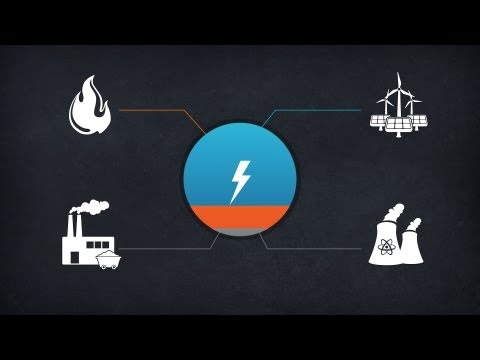
Amory Lovins // TED Vetted 8/10
The physicist who's advised both the Pentagon and Walmart on getting off oil and coal: cheaper, business-led, and framed as security economics, not ideology. "Our energy future is not fate, but choice."
Workers must capture a fair share of the value they create. You can't save what you don't earn.
Sectoral bargaining, anti-monopsony enforcement, co-determination, banning non-competes, portable benefits.
Alone, it fails: wage gains get eaten by concentrated markets raising prices. Wages are the first floor; ownership is the second. Build them in order.
For thirty years after the war, an hour of American work and the pay for that hour climbed the same hill together. Produce more, earn more. It held long enough that everyone assumed it was a law of nature. Then it wasn't. The chart on the front page shows the split at 1979 plainly, and the space between those two lines is most of what people mean when they say the country stopped working for them. The tools here are old and proven: real bargaining power, enforcement against wage-fixing, an end to non-competes for line cooks. What's new is refusing to let the repair depend on annual courage. Tie the wage floor and the earned-income match to the gap itself. When pay tracks what work produces, the supports rest. When the gap widens again, they lean in, without anyone having to win a news cycle first.
“Raise the wage floor and you destroy the jobs at the bottom you claim to protect.”
The best-studied minimum wage increases keep failing to produce the job losses the textbook promised, and the reason turned out to be simple: where employers hold the power to set wages below what work produces, a floor moves pay without moving employment. The honest boundary is real, though. A floor indexed past productivity would bite. That's why the design ties it to the gap between pay and output, not to a wish.
“Unions made American industries uncompetitive. Sectoral bargaining is a cartel.”
The three decades when American labor was strongest were the same three decades this site charts as the economy's best, for everyone including the top. Germany runs works councils and co-determination inside one of the most export-competitive economies alive. What actually hollowed out American industry was concentration and offshoring, which are the other levers' jobs. Blaming the paycheck was convenient for the people doing the concentrating.
“The productivity-pay gap is a measurement artifact. Add benefits and use the right deflator and it mostly disappears.”
Partly fair, and worth saying plainly: total compensation and different deflators narrow the gap. They don't close it. Even the most conservative decompositions leave a large divergence that began at the same historical moment everything else on this site turned. We keep this one posted as an open question with the math shown, because the honest version of the chart is still damning.
Nick Hanauer // TED Vetted 7/10
His second appearance on this page, on purpose. The capitalist's case that higher wages don't kill jobs, they create customers. Prosperity is built middle-out, not trickled down.
Make owning a stake in the economy the default, not a privilege of the already-rich.
Auto-enrollment investment accounts, a public index fund option, baby bonds, employee ownership, supply-side housing policy.
Alone, it fails: every downturn wipes out the assets of the most vulnerable unless the fiscal architecture holds.
Of everything on this page, this is the lever I would defend last and hardest. Wages are the first floor, but a paycheck stops the moment you do. Ownership works while you sleep, and right now half the country owns almost nothing that compounds. A child born this year with a seeded account owns something on day one. It grows through every recession and rally of their childhood, and by eighteen it isn't a lecture about compounding. It's proof, with their name on it. Employee ownership does the same thing for a paycheck: the mechanic who owns a slice of the shop wins less than the theoretical maximum too, and he wins it for the rest of his life. This is the slow lever. It moves on the scale of a childhood, not a quarter, which is exactly why it has to start automatically and early. Before the next crisis, not after.
“Baby bonds are welfare with extra steps. Kids will cash out at eighteen and it changes nothing.”
The accounts are locked until adulthood and restricted to the things that compound: education, a home, a business, retirement. Britain ran a version and taught everyone the failure modes, high fees and forgotten accounts, which are design bugs, not fate. And the deeper answer is that ownership is taught by owning. A kid who watches an account with her name on it ride two recessions learns more about markets than a semester of financial literacy class.
“You're tying the poor's safety net to the stock market. Markets crash.”
The floor is not this lever's job; that's what wages and the crisis architecture are for, and the sequence matters: floors first, then ownership. Over the span of a childhood, every American market crash has been a dip in an upward line. Meanwhile the bottom half currently carries all of the crash risk of this economy, in jobs and homes, with none of the compounding upside. This lever doesn't add risk to them. It finally adds the upside.
“Seeding an account for every baby sounds enormously expensive.”
It costs less per year than a single mid-sized crisis response, and unlike a crisis response it's an asset, not an expense. Route a defined slice of the windfall fund into the seeds and the program pays itself forward: the commons funds the next generation's stake in the commons. As levers go, this is the cheapest structural change on the page.

Darrick Hamilton // TED Vetted 8/10
The economist behind baby bonds: a seeded trust account for every newborn, calibrated to family wealth. Connecticut launched a version in 2023.
Economic airbags: systems that deploy on impact without waiting for a committee vote.
Automatic stabilizers over discretionary bailouts, counter-cyclical fiscal rules (Chile ran this well), GDP-linked bonds, pre-committed crisis protocols with democratic override.
Alone, it fails: airbags protect the balance sheet but don't change who owns the car. Buffers without ownership just fund the next subsidy trap.
I keep the airbag comparison because it embarrasses the right people. Nobody proposes a national conversation about whether to deploy the airbags during the collision. But that is how we run rescues: the crash happens, then the committee meets, and the people with lobbyists in the room get the terms. The alternative already exists in pieces. The Sahm rule can say a recession has started before any official will use the word. Payments can reach most households in two weeks; 2020 proved it. What's missing is the standing decision. Decide now, in calm, what triggers support, what the rescued owe the public, where the windfalls route, and just as carefully, what turns it all off. Vague exits are how emergency programs lose the public's trust for a generation. The three bills in Play 1 are this lever, drafted and waiting for the window.
“Automatic triggers misfire. Yours fired in 2024 with no recession in sight.”
It did, and that flicker is in the design file on purpose. The Sahm rule produced two false signals in sixty years, then wobbled in 2024's strange labor market, which is why the drafted version requires a second confirming indicator and defines the off switch as concretely as the on. Now weigh the alternative's record: in 2008 the committee approach took months, and the terms were written by the people being rescued. Both systems have error bars. Only one has them in your favor.
“Guaranteed rescue is moral hazard. Firms will act recklessly knowing the safety net exists.”
The equity term is the answer. Automatic rescue with automatic dilution is not a promise to shareholders, it's a warning: fail into the public's arms and the public owns a piece of you on the way out. That's Bagehot's old rule, lend freely at a penalty, finally applied to the whole economy. What we run now is the moral hazard: the rescue arrives anyway, late, and free.
“Congress will just repeal the triggers the first time they're inconvenient.”
True, and we won't pretend otherwise: automatic law buys defaults and friction, not permanence. But defaults are worth more than they look. Repealing a standing trigger is a public vote to remove the airbags, on the record, before the crash. Quietly failing to act, which is the current system, never requires anyone to raise a hand. Making inaction expensive is most of what law can do.
Ray Dalio // Bridgewater Vetted 7/10
The billionaire fund manager's 30-minute animated map of debt cycles and deleveraging. You can't design crisis airbags until you understand the machine that crashes. Watched over 40 million times for a reason.
When four companies control 80% of a market, that's not wealth creation. It's wealth transfer.
Antitrust with teeth, financial concentration limits, patent reform, open standards and interoperability.
Alone, it fails: break up concentration without the other levers and new concentration forms. This is the immune system, and immune systems defend a body, not a vacuum.
Every other lever on this page can be pulled perfectly and still lose, because concentration is patient. Break up a monopoly and leave the incentives alone, and in twenty years there's a new monopoly with better lawyers. So this one has to run like an immune system, not a courtroom drama. The question isn't whether some company is evil. It's a number: how few hands control energy, food, housing, care, and credit, the things nobody can opt out of. Watch the number, sector by sector. When a handful of firms hold most of an essential market, their mergers stop getting the benefit of the doubt, and the standards that let competitors exist, open protocols and interoperability and data you can take with you, stop being voluntary. None of it requires a villain. Concentration in the essentials is what gives its owners pricing power in a squeeze, and the squeeze is when the rest of us pay.
“Big is efficient. Breaking up successful companies punishes success and raises prices.”
Scale economies are real, which is why the test here is a number by sector and not a feeling about bigness. But when the squeeze came in 2021 and 2022, the most concentrated essential sectors posted the widest margins, which is at minimum a very bad look for the efficiency story. And the classic case cuts the other way: the Standard Oil breakup made Rockefeller richer, not poorer. Competition and the fortunes of the competent survive each other fine. What doesn't survive is the ransom.
“Market definition is where antitrust goes to die. Your concentration thresholds will be gamed by lawyers for a decade.”
Which is exactly why this lever leans on standing rules instead of courtroom drama. Interoperability, open protocols, and data you can take with you don't require winning a market-definition fight; they just make exit possible, and possible exit disciplines prices better than any lawsuit. Where cases are still needed, structural presumptions flip the burden: past a published threshold, the merger explains itself. The lawyers still eat. They just eat faster.

Lina Khan // The Daily Show Vetted 8/10
The former FTC chair on why antitrust is a constitutional idea: checks and balances for economic power, not just political power. Her approach has vocal critics too, which is exactly the debate this forge exists to host.
Tax it smarter. Own it publicly. Stop needing what they control. Pay work fairly. Distribute ownership by default. Build systems that don't collapse under pressure. Break up the concentration that creates the problem.